
How a Culture of Excellence Lifts Every Learner
“The key to excellence is this: It is born from a culture.” - An Ethic of Excellence by Ron Berger
If you asked the Rebels at Revel Academy what they love most about being a Revel Rebel, a very large portion of our learners say things like “There’s no bullies here,” or “Everyone wants you to try your best,” and “It’s okay to make mistakes in front of each other,”. When learners enter Revel Academy, they enter a community culture and a school culture that both demands and supports excellence. As Ron Berger states in his book, An Ethic of Excellence, “What if being in a school, fitting in, means caring about your work and treating others with respect?”
What is Mastery Learning?
At its core, mastery learning is built on a simple but powerful belief: learning happens best when learners are given the time, feedback and support they need to truly understand something before moving on. In a mastery-based model, learning is not dictated by arbitrary timelines or averages. Instead, learners progress once they’ve demonstrated genuine understanding and skill. This naturally creates a self-paced learning environment, where depth matters more than speed and growth matters more than comparison.
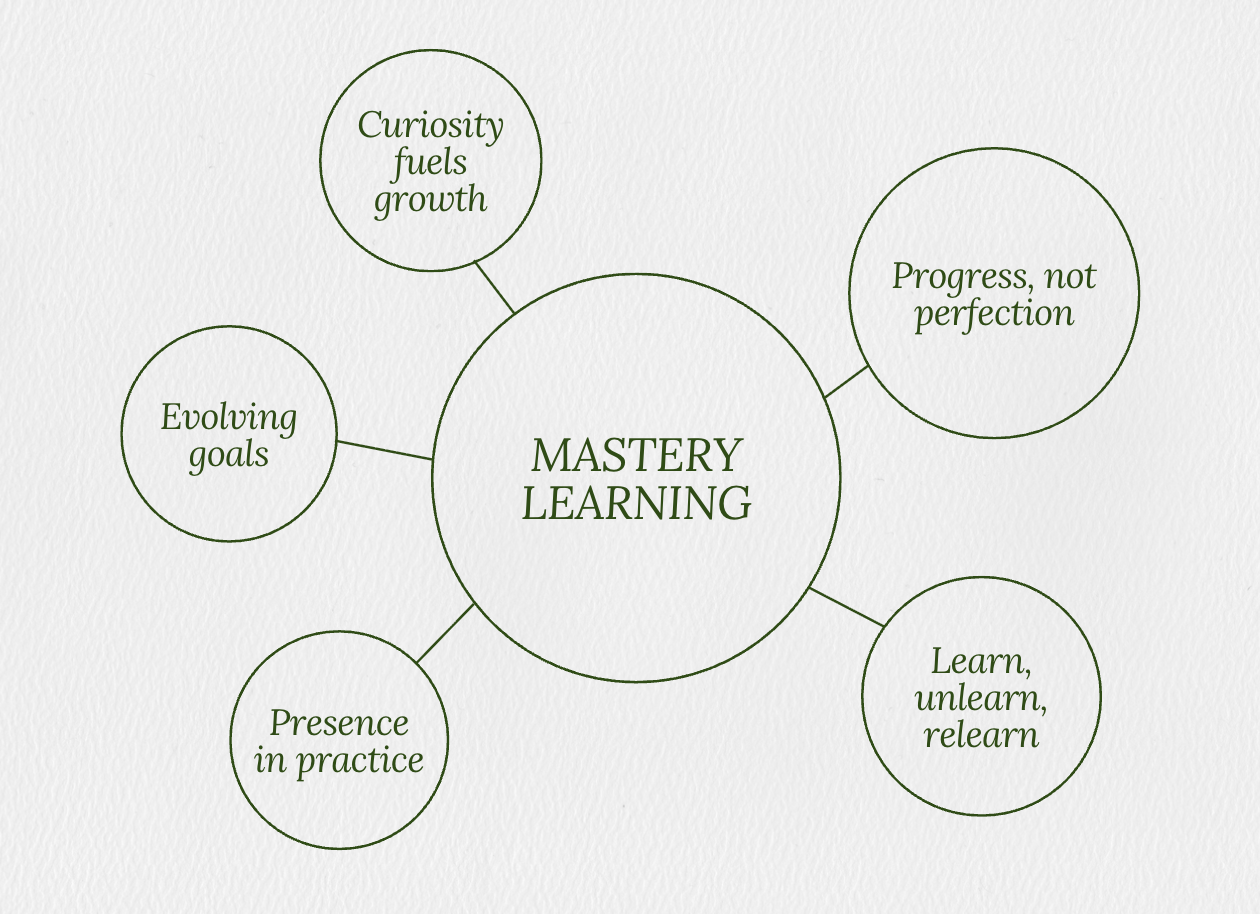
Revel Academy offers one of the only mastery-based learning experiences in a K-8 school model in the city of Ottawa. Revel’s learning design is built on our learners being met where they’re at so they can build strong foundations and develop confidence through 21st century competencies. Our learners learn to reflect, revise and persevere as they see challenges as a normal and healthy part of their learning journey. However, we find when talking with prospective families that mastery learning is often misunderstood as something that only benefits individual learners who need more time. When, in reality, its greatest impact is cultural.
I think what I found most surprising after being immersed in a mastery learning environment, especially when reflecting on my previous teaching experiences in traditional public schools and private schools, is that when mastery becomes the norm, the culture of a school changes in very deep, meaningful ways. Everyone in this community learns quickly that work is meant to be improved, not rushed. Feedback is expected, not feared. Excellence is a process, not a one-time performance. Most importantly, our learners realize that they (and everyone else around them) are capable of producing high-quality, excellent work.
As Ron Berger describes in his book, An Ethic of Excellence, when learners enter a culture with a powerful ethic, they adapt to it. In a mastery learning environment, excellence isn’t reserved for a few high-achieving students, it becomes the shared standard. The culture at Revel has a genuine ripple effect starting with the learner. Rebels realize what they’re capable of and raise their own expectations of themselves. Feedback from mixed-age peer groups becomes more thoughtful and supportive. Healthy struggle is normalized, which in turn has great impacts on reducing anxiety and perfectionism. Rebels’ pride shifts from “being done” to “I’m doing this really well”.
Mastery learning sends a quiet but powerful message to learners: We believe you are capable of excellence and we’re here to give you the space and support to get there. That belief shapes our Rebels’ identities. Learners don’t see themselves as “good” or “bad” at school. They see themselves as true, life-long learners who are capable of growth and meaningful achievement.
What this looks like at Revel…
At Revel, mastery learning shows up in very visible but also subtle ways throughout the day. Rebels work through academic goals at their own pace every morning for an hour during Core Skills. These academic goals reflect literacy and communication skills, math and computational thinking, French language skills and more (depending on individual learners’ readiness and interest). Rebels revisit concepts when needed and move forward only when their understanding is solid, not just because a calendar says its time. Guides and peers provide ongoing feedback and coaching, helping learners reflect on their work, revise thoughtfully and set meaningful goals and next steps. Rebels also come to see challenge and struggle as normal. Needing more time, asking for help, revisiting a skill are not signs of failure. They come to learn those are all simply part of how we learn to learn well.
How does this translate to our culture of kindness and respect for others? Well, most simply put: competition gives way so compassion can flourish. As soon as you step into Revel’s learning environment, you understand very quickly that everyone is working towards very high standards, even if their paths are different. This in turn, builds respect for individual differences and reduces shame for being “behind”, “ahead” or “not where my friend is at”. Most importantly, mastery learning nurtures Rebels’ ability to show self-respect and self-compassion. They know first-hand how healthy struggle feels, how to receive feedback (both positive and constructive), how to fail (often, in front of others) and I think that’s directly reflected in the ways they extend so much grace and kindness to others. It’s a culture where vulnerability is safe and effort is valued, which reinforces kindness as a shared responsibility, not just a school rule.
At Revel Academy, mastery learning isn’t just an academic framework. It is a cultural commitment. This is how we protect curiosity, build resilience, and foster a space where learners believe they can achieve anything they put their minds to. At Revel, mastery learning proves that excellence and kindness are not competing values, put partners in a culture where every learner can truly thrive.
